The home is not only about finding shelter for the body, but rather more than that. The home will reveal aspects about your personality and philosophy. No matter whether you are planning on redecorating one room, or renovating your entire home, having a clear vision is key. Come along and let us explore the modern home decor ideas that represent modern interior design. Interior design was always considered ornate, heavy with wood and symmetric.
In the modern interior world, sharp lines, practical spatial planning, and the seamless connection between rooms are in focus. This balance depends on the knowledge and awareness of spatial dynamics and authentic materials. This all-inclusive guide provides valuable, impactful solutions to enrich your home. You will discover how to integrate form and function in an effective way.
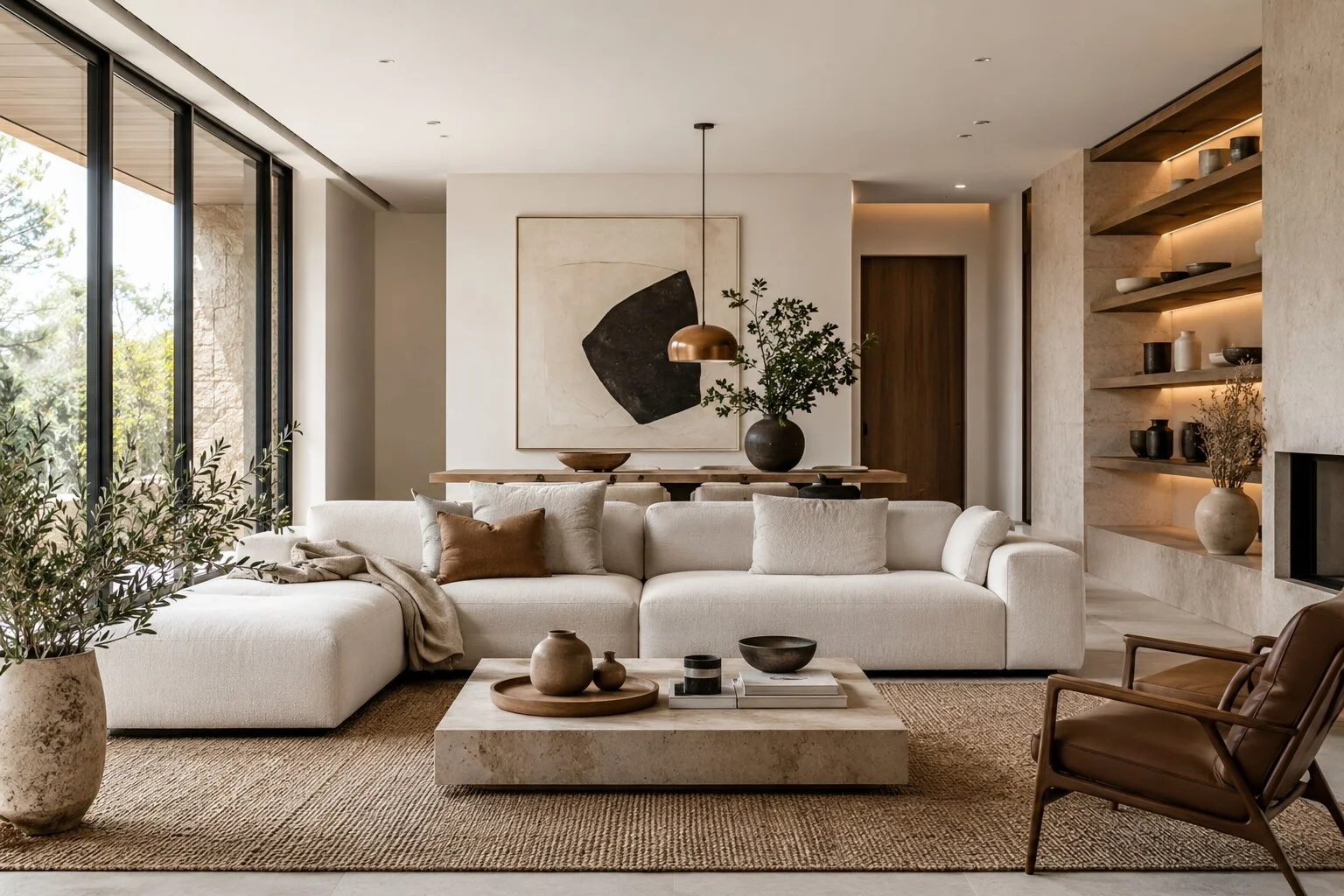
1. Architectural Minimalism: The Foundation of Modern Spaces
The main theme of modern interior design is minimalism. Removes unnecessary distractions to allow structure to emerge. Start with a sense of simplicity and avoid filling in all the corners. This way, there will be space and clarity of vision.
The Power of Negative Space
Negative spaces are the spaces around and between objects. This area is very important today and is considered as an integral part of the furnishings rather than a decorative wall. Don’t fill your walls with too many pieces of artwork. Leave blank spaces between to rest eyes.
Make sure furniture is low, and close to the floor. This trick is used to make the ceiling appear higher. This makes your rooms instantly more spacious, taller and purposeful.
Smart Concealed Storage Strategies
If surfaces are filled with clutter every day, there’s no way to get a “sleek” look. Buy a custom cabinetry that is straight to the wall and will run from the floor to the ceiling. Ensure unbroken lines by using push to open doors without handles.
Furniture with multiple functions is also a great choice. Find lift top or platform beds with concealed drawers for a coffee table. These items store your everyday necessities within easy reach but well hidden.
2. Textural Layering: Elevating Neutrals Without Color Clutter
The use of monochromatic colors can make a space appear cold, sterile or unwelcoming. The solution to this is to add in a good amount of texture. By using tactile fabrics, layers of warmth, depth and sophistication are added to neutral rooms.
Mixing Raw and Refined Textures
Contrast makes an appearance in a single-color interior through the juxtaposition of two surfaces with different finishes. One could put together a smooth and shiny concrete floor with a cozy bouclé armchair. An artistically carved wood stool would go next to a black metal floor lamp with a matte finish.
Such refined contrasts may work as a substitute for lively colors because they make people come into the room.
- Industrial Metals: Use matte, brushed or anodized finishes on the light fixtures, hardware and furniture frames.
- Organic Woods: Use wood that has been selected, raked, wire brushed or raw oiled for accent walls, shelving and bases for coffee tables.
- Use tactile materials in upholstery, draperies and throw cush – such as bouclé, heavy linen, or nubuck.
- Natural Stones: Use honed marble or concrete for countertops, hearths and decorative vessels.
Choosing a Sophisticated Color Palette
Steer clear of bright, white colors. Rather, establish a base with a variety of rich hues. Envision soft alabaster colors, muted taupe, mushroom grey, and warm greige.
Contrasts against earthy colors should be used. Black, dark olive green, and burnt terracotta are some of the color suggestions. The use of these darker colors should be minimized by using them in the frames of the windows, pillars, or hardware components of your choice.
3. Biophilic Integration: Bringing Nature Inside
Biophilic design is one of the designs that incorporate nature in the interiors. It plays a major role in helping to relieve stress and improve the indoor air quality. It goes beyond planting a tree in the dark corner of the room.
Incorporating Large-Scale Living Greens
Use plants as significant elements for your room arrangements. An empty corner looks great with a tall Fiddle Leaf Fig or a dramatic Monstera Deliciosa.
Plant in unglazed terracotta, coarse sandstone, or worn concrete containers. Plant an odd number of plants, like three or five. Have plants of varying heights in order to mimic growth. One such arrangement would be of a tall snake plant growing in a concrete container at ground level, followed by a calathea and finally a pothos plant.
Emphasizing Natural Light and Airflow
Make the best use of natural light. Replace chunky, heavy drapes with sheer linen drapes to gently soften sunlight. Avoid placing heavy furniture by the windows.
Mirrors facing windows to reflect light as far as possible into darker hallways. Wipe down the glass surfaces regularly for maximum light transmission all year round.
4. Multi-Functional Furniture: Adapting to Flexible Living
In modern homes, we need to change with the changing needs of our everyday lives. Rooms are frequently used for a variety of functions during the day. This flexibility must be reflected in the furniture you select, but without compromising clean design.
Selecting Adaptive, High-Performance Pieces
Find modular sofas which can be rearranged when you need them for social activities or watching movies. Buy an extension table with retractable leaves.
These tables are large enough for a dining party but at the same time small enough to use on a daily basis in the house. You should use light accent chairs which can be moved around from one place to another according to your requirements. Every piece of furniture should serve more than one purpose.
Designing a Seamless Hybrid Home Office
Smart integration of remote workspace in living areas is needed. Keep bulky, commercial office desks in main spaces. Instead, go for an elegant floating desk that complements the interior of your shelves.
Go for a furniture ergonomic chair with upholstery made of fine material like wool and linen. It will help your work space blend in with your room after your work is done.
5. Architectural Lighting: Setting Mood and Dimension
Interior architecture is illuminated and formed by lighting. One intense light in the ceiling can destroy any room and ambiance. Rather, sculpt with several layers of light.
Implementing Low-Glare Ambient Layers
Wash walls with soft, indirect lighting using architectural coves or LED channels. This method shows wall textures but does not reveal bright lights.
Fit dimmer switches on all the lights in your house. This will allow you to have 24/7 control over the atmosphere. Idea of providing three levels: ambient cove lighting, task lamps for reading purposes and directional spotlights for art.
Selecting Statement Luminaire Designs
Think of your visible light fixtures as art rather than a light fixture. Look for fixtures that are shaped like polygons, have straight edges and a matte finish.
The dining area has a black metal pendant that acts as a focal point for the space. It creates an impression in the space without being switched on.
6. Curated Art and Decorative Accents: Personalizing the Space
The last thing is to make your home personal without any clutter. Stay away from products that are manufactured in bulk and sold in large quantities in stores. Instead, be mindful of the few high quality meaningful pieces.
Embracing Oversized, Bold Artwork
A big canvas will definitely make an impression that a bunch of little prints won’t be able to make. Select pieces of abstract art that will complement the colors of your room.
Ensure that your canvas takes up about 2/3 to 3/4 of the wall space. Go for a minimalistic, slim frame that will not clutter the picture.
Incorporating Artisanal Ceramic Objects
Make ceramics, hand blown glass and stone objects for decorating your shelves. Search for those items that are rare and have some human flaws.
Sort objects into groups of material or colour family on your shelves. Provide sufficient room around each group for everyone to see all the objects.
Implementing Innovative Modern Home Decor Ideas
The key to turning your house into a success is editing. Go through the rooms and get rid of things that aren’t serving a clear purpose or their own. Concentrate on quality instead of quantity.
Use attractive fabrics, make the most of natural light and maintain open layouts. With these contemporary home decorating tips you will be able to make a classy and serene refuge that will serve you for a long time.
Also, check out small bedroom decor ideas
Frequently Asked Questions
What are the most affordable modern home decor ideas for small apartments?
First, attempt to make the best out of the available space. This can be done through the use of light-colored walls. This will create an illusion of openness within the room. Floating shelves should be used and everything on the wall should be made good use of. Surfaces should remain free of clutter. A floor-length mirror should be used to reflect light.
How do I mix vintage items into modern home decor ideas successfully?
Maintaining the equilibrium with the help of the interior designing rule of 80/20. You have to use 80 percent of your room space for keeping the clean backgrounds and streamlined forms. The remaining 20 percent can be decorated with some of the vintage pieces. A mid-century wooden chest or an antique rug will give much charm to the contemporary room without spoiling its elegance.
Which color palettes work best when executing modern home decor ideas?
Have a sophisticated neutral base color, such as alabaster, soft greige and warm taupe. Add in vibrant depth with organic accents in natural colors. Deep forest green, charcoal and burnt terracotta are great options. Use 3–4 primary colors to maintain a peaceful visual environment.
How can I make modern home decor ideas feel cozy rather than cold?
Add lots of textures in your rooms to add instant physical warmth. Use soft wool floor rugs on hard floor surfaces such as concrete or timber. Pair nubuck leather, heavy linen and plush bouclé fabrics together when it comes to seating choices. To create a pleasant and relaxing atmosphere, use warm-toned lighting (2700K to 3000K).
What lighting options best support open-plan modern home decor ideas?
To separate open space into different functional areas, install dedicated light fixtures. Create a large architectural pendant to hang above your dining table. Place an articulated floor lamp next to your reading armchair. Install a soft, even light in ceiling covers with programmed, dimmable LED strip lights throughout the room.