Deep Learning: Foundations, Tools, Careers & Interview Guide (2026)
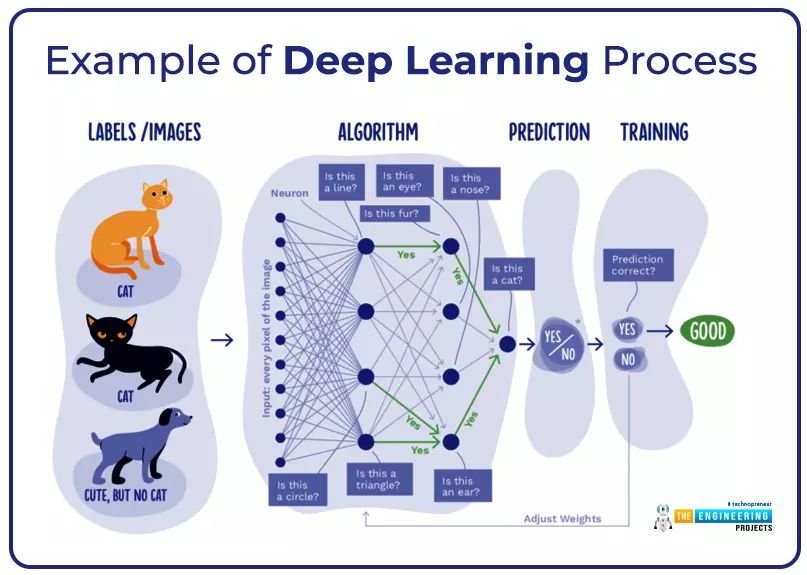
Deep learning has transformed how machines understand language, images, sound, and decision-making. From NLP systems and computer vision to reinforcement learning agents, deep neural networks now power modern AI applications.
This article covers:
What deep learning is (vs. machine learning & classical NLP)
Key foundations and concepts
Popular tools like PyTorch & Hugging Face
Deep reinforcement learning (TAMU context)
Workstations for deep learning
Unsupervised learning & thermodynamics
Performance engineering in deep learning
Top deep learning interview questions
1️⃣ What Is Deep Learning?
Deep learning is a subset of machine learning that uses multi-layer neural networks to automatically learn features and perform tasks like classification, prediction, and generation.
🔹 Machine Learning vs Deep Learning
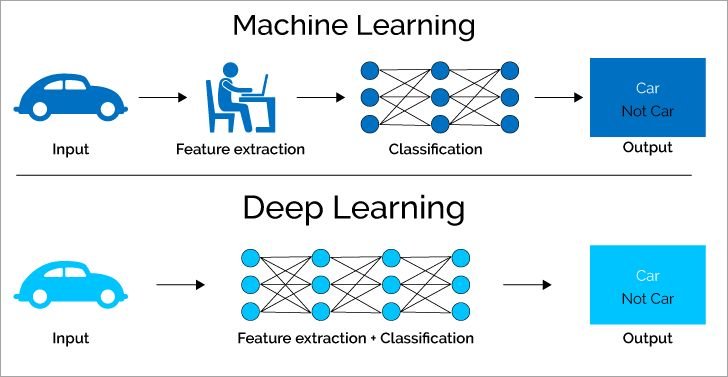
Traditional Machine Learning:
- Manual feature extraction
- Separate feature engineering + classification
- Works well on structured data
Deep Learning:
- Automatically learns features
- End-to-end training
- Excels in images, text, audio, and large datasets
Example:
- ML: Extract image edges manually → classify as “Car / Not Car”
- DL: Neural network learns edges, shapes, and patterns automatically
2️⃣ Deep Learning in NLP
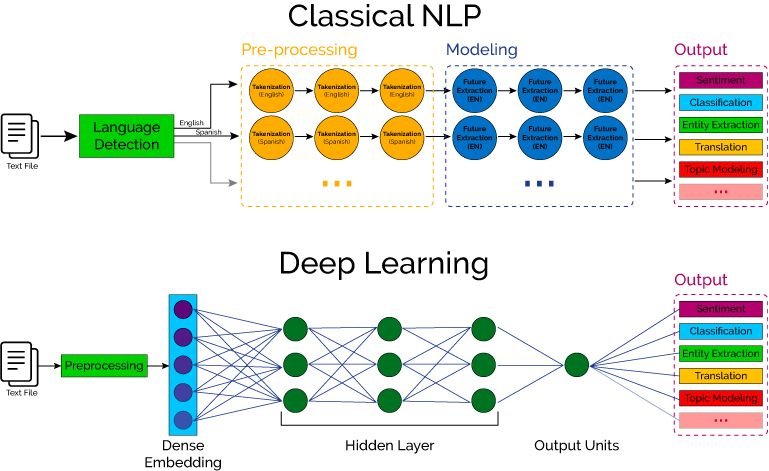
🔹 Classical NLP Pipeline
- Language detection
- Tokenization
- Feature engineering (TF-IDF, n-grams)
- Modeling
- Output (sentiment, translation, topic modeling)
🔹 Deep Learning NLP
- Dense embeddings
- Hidden layers (LSTM, CNN, Transformer)
- Output layer (classification, translation, entity extraction)
Modern NLP relies heavily on transformer-based models such as:
- BERT
- GPT
- RoBERTa
These are often implemented using:
- PyTorch
- Hugging Face
3️⃣ Deep Learning with PyTorch & Hugging Face
🔹 PyTorch
Developed by Meta, PyTorch is:
- Dynamic computation graph
- Python-friendly
- Popular in research
🔹 Hugging Face
Provides:
- Pretrained transformers
- Datasets
- Tokenizers
- Model hub
Typical workflow:
from transformers import pipeline

classifier = pipeline("sentiment-analysis")
classifier("Deep learning is amazing!")
Used in:
- Chatbots
- Text summarization
- Translation
- Question answering
4️⃣ Deep Reinforcement Learning (TAMU Focus)
At Texas A&M University (TAMU), research in deep reinforcement learning focuses on:
- Robotics
- Autonomous systems
- Multi-agent learning
- Control systems
Deep RL combines:
- Neural networks
- Q-learning / Policy gradients
- Environment interaction
Applications:
- Self-driving cars
- Game AI
- Industrial automation
5️⃣ Deep Learning: Foundations and Concepts
If you’re studying Deep Learning: Foundations and Concepts, focus on:
Core topics:
- Linear algebra (vectors, matrices, eigenvalues)
- Probability & statistics
- Gradient descent
- Backpropagation
- Activation functions (ReLU, Sigmoid, Tanh)
- Loss functions
- Regularization (Dropout, L2)
- Optimization (Adam, SGD)
Advanced:
- CNNs
- RNNs
- Transformers
- Attention mechanisms
- Diffusion models
6️⃣ Deep Unsupervised Learning Using Nonequilibrium Thermodynamics
This refers to the groundbreaking paper by Jascha Sohl-Dickstein.
It introduced the foundation of diffusion probabilistic models, which later influenced:
- DALL·E
- Stable Diffusion
- Modern generative AI
Key idea:
- Gradually add noise to data
- Learn to reverse the noise process
- Generate realistic samples
This concept reshaped generative AI.
7️⃣ Deep Learning Workstation: What You Need
For serious deep learning work:
🔹 Minimum Setup
- GPU: RTX 3060+
- 32GB RAM
- 1TB NVMe SSD
🔹 Advanced Setup
- RTX 4090 or A6000
- 64–128GB RAM
- Multi-GPU setup
- Linux OS (Ubuntu recommended)
Cloud alternatives:
- AWS
- GCP
- Paperspace
- Lambda Labs
8️⃣ Performance Engineer – Deep Learning Role
A Deep Learning Performance Engineer focuses on:
- GPU optimization
- Memory profiling
- Distributed training
- Mixed precision (FP16, BF16)
- CUDA kernel tuning
- Model quantization
- Inference optimization (TensorRT, ONNX)
Skills required:
- CUDA
- PyTorch internals
- Profiling tools (Nsight)
- Parallel computing
Salary range (US): $130k–$200k+
9️⃣ Top Deep Learning Interview Questions
🔹 Basic
- What is backpropagation?
- Why use ReLU?
- What is vanishing gradient?
- Difference between CNN and RNN?
🔹 Intermediate
- Explain batch normalization.
- What is attention mechanism?
- How does Adam optimizer work?
- What is overfitting and how to prevent it?
🔹 Advanced
- Explain transformer architecture.
- What is diffusion model?
- How would you scale training to multiple GPUs?
- Difference between model parallelism and data parallelism?
🔟 Career Paths in Deep Learning
- AI Researcher
- ML Engineer
- NLP Engineer
- Computer Vision Engineer
- Deep RL Researcher
- Performance Engineer
- MLOps Engineer